


In modern dentistry, orthodontics is no longer just about aesthetics; it is a vital treatment closely linked to bite function, oral hygiene, and joint health. At Taipei Boston Dental Clinic, our orthodontic team—led by Dr. Jessica Yang, an expert in invisible orthodontics—utilizes precision digital scanning and the Invisalign system to craft personalized treatment plans that restore healthy bites and natural smiles.
Why Do I Need Orthodontics? Common Causes of Crooked Teeth
Crooked teeth are about more than just aesthetics. Misalignment can create “blind spots” that are difficult to clean, increasing the risk of gum disease and cavities. In more severe cases, it can even lead to jaw joint (TMJ) issues or facial asymmetry.
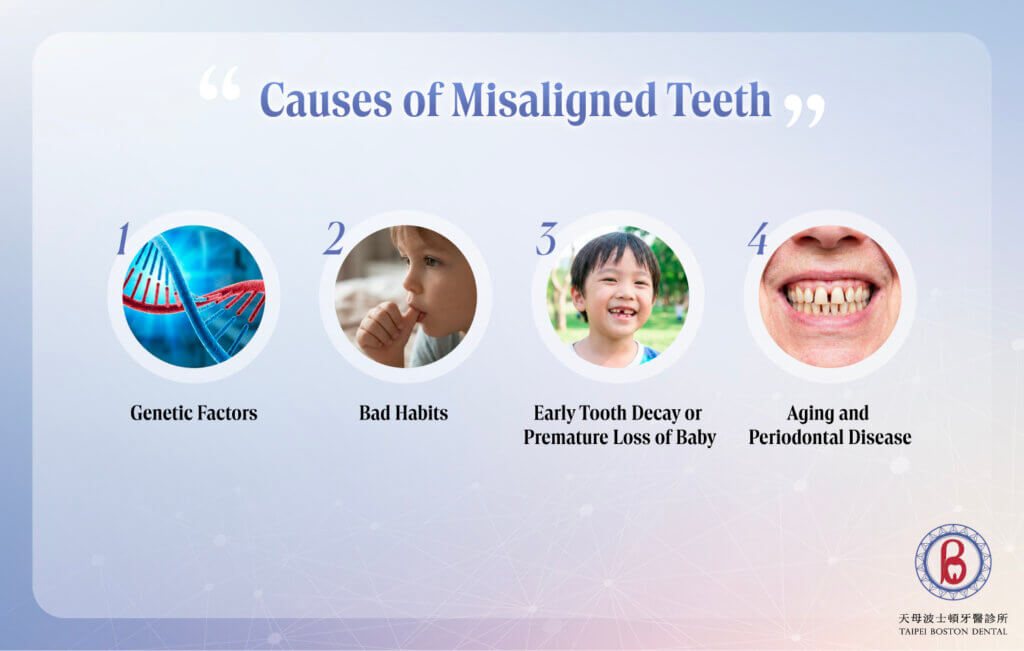
Common causes of crooked teeth include:
- Genetics: Discrepancies in jaw size, or having teeth that are naturally too large or too small.
- Poor Habits: Long-term habits such as mouth breathing, thumb sucking, biting on pens, or chewing on only one side.
- Early Tooth Loss: Premature loss of baby teeth due to decay can cause the dental arch to lose space, leaving insufficient room for permanent teeth to grow in.
- Aging and Gum Disease: As the supporting structures of the teeth weaken with age or periodontal disease, teeth may gradually shift, tilt, or drift.
Through orthodontic treatment, you can restore an ideal arch shape and bite stability, achieving a smile that is both healthy and confident.
How Does Orthodontic Treatment Work?
The core principle of orthodontic treatment is the application of gentle, continuous force over time, allowing teeth to move gradually within the alveolar bone. When braces or aligners apply pressure, bone resorption occurs on the side under compression, while new bone forms on the opposite side. This natural biological process enables teeth to shift safely and stabilize in their ideal positions.
Modern digital orthodontic technologies, such as Invisalign, use 3D computer simulations and AI-assisted analysis to precisely plan tooth movement. This allows both the orthodontist and the patient to preview the entire treatment process in advance, providing clearer expectations, improved control of the treatment timeline, and more predictable results.
Who needs orthodontic treatment?
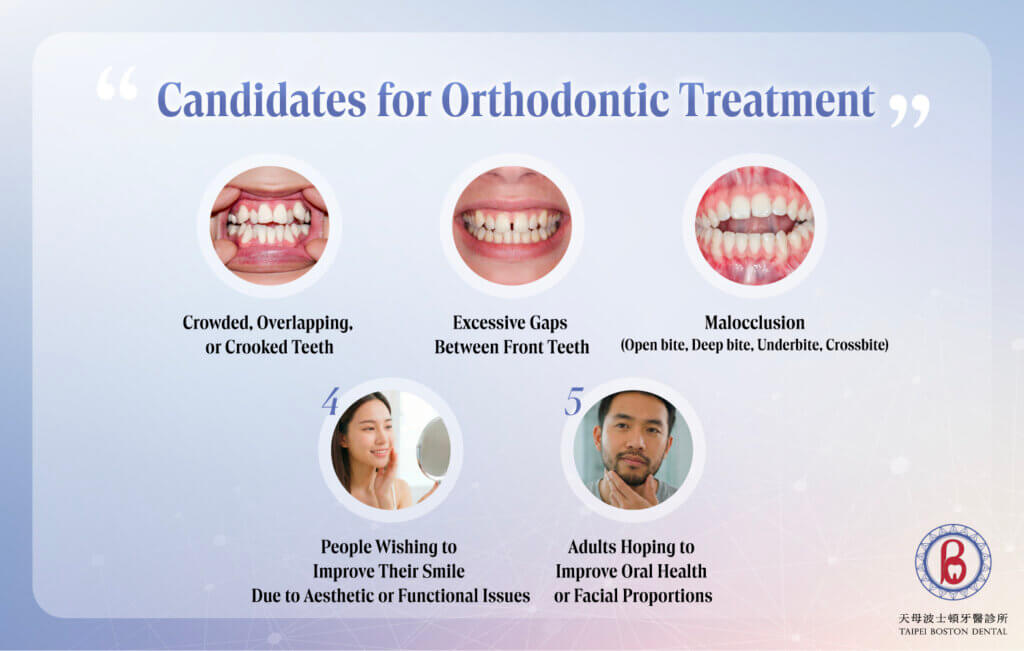
Orthodontic treatment is not limited by age. As long as your teeth and gums are healthy, most people can benefit from it. Common candidates include those with:
- Crowded, Overlapping, or Crooked Teeth
- Large Gaps Between Teeth
- Malocclusion (Open bite, deep bite, underbite, and crossbite)
- Aesthetic or Functional Concerns
- Adults Seeking Better Oral Health or Facial Proportions
In adult orthodontics especially, orthodontists can precisely evaluate bone structure, periodontal support, and jaw joint health. This expert assessment ensures that the treatment is both safe and highly predictable.
What are the Common Types of Orthodontic Treatments?
Modern orthodontic technology offers a variety of options. Depending on your aesthetic preferences, treatment timeline, and comfort needs, there are several effective solutions:
- Invisalign Invisible Orthodontics
Clear aligners are removable, highly aesthetic, and easy to clean, making them the perfect choice for professionals and students who value both their image and quality of life.
At Taipei Boston Dental Clinic, we utilize the Invisalign system, where our orthodontist, Dr. Jessica Yang, precisely controls every stage of your tooth movement.
- Traditional Metal Braces
Ideal for teenagers or highly complex cases, metal braces provide stable and consistent force for adjustment, though it is more visible in appearance.
- Ceramic Braces
Made of tooth-colored materials, ceramic braces blend in with your natural teeth for enhanced aesthetics while providing similar functionality to traditional metal braces.
How long does orthodontic treatment take, and what factors affect the timeline?
On average, orthodontic treatment takes about 1.5 to 2 years. However, the actual duration varies based on several key factors:
- Severity of Misalignment
- Age and Bone Response
- Treatment Method (Invisalign vs. traditional braces)
- Tooth Extraction
- Patient Compliance
Taking Invisalign as an example: each aligner is designed to move teeth by approximately 0.25mm. If the patient wears them diligently for at least 20 hours a day, the treatment can often be completed more efficiently with stable, predictable results.
Special Timelines | Piezocision
For patients with specific time constraints—such as preparing for a wedding, studying abroad, or other major life events—Taipei Boston Dental Clinic offers Piezocision, an advanced option for accelerated orthodontic treatment.
Developed by Dr. Serge Dibart at Boston University, Piezocision is a minimally invasive technique designed to enhance orthodontic efficiency. By creating small, precise incisions in the gingival tissue, the procedure stimulates the natural bone remodeling process, allowing teeth to move more efficiently while maintaining bone stability and periodontal health.
Dr. Sean Lee, who received advanced training at Boston University, has the clinical experience and expertise required to safely perform this specialized technique as part of a comprehensive orthodontic treatment plan.
Does Orthodontic Treatment Hurt? How to Relieve Discomfort?
It is normal to experience mild soreness or pressure during the initial stages of treatment. This is a positive sign that your teeth are moving. Here are some common ways to relieve discomfort:
- Choose Soft Foods (porridge, eggs, or tofu)
- Warm Saltwater Rinse
- Pain is typically milder with Invisalign because the aligners apply uniform, precisely controlled force.
Most patients adapt within a week, after which the treatment has minimal impact on daily life.
Dietary and Oral Hygiene Tips During Orthodontic Treatment
Dietary Habits
- Avoid sticky, hard, or crunchy foods (such as nougat, popcorn, or nuts)
- For Invisalign users, always remove your aligners before eating. Brush your teeth thoroughly after every meal before putting them back in.
Oral Hygiene
- Brush your teeth at least three times a day and use dental floss, interdental brushes, or a water flosser for a deeper clean.
- For Invisalign users, clean aligners with specialized cleaning crystals or rinse them with lukewarm water. Avoid hot water, as it can cause the aligners to warp or deform.
- Attend your scheduled appointments to monitor your periodontal health and teeth cleaning status.
Maintaining excellent oral hygiene is the key to preventing white spots, cavities, and gum inflammation, ensuring the overall success of your treatment.
Cost of orthodontic treatment. Are installment plans available?
The total cost of treatment varies based on the chosen method, the complexity of the case, the estimated treatment time, and the expertise of the orthodontist. For reference, the average price ranges in the Taipei / Tianmu area are as follows:
- Invisalign Clear Aligners: NT$180,000 – $250,000
- Traditional Metal Braces: NT$100,000 – $150,000
- Ceramic Braces: NT$120,000 – $180,000
Most clinics, including Taipei Boston Dental Clinic, offer flexible installment plans to help patients manage their budgets effectively.
Choosing a board-certified orthodontist helps lower treatment risks and reduces the chance of unexpected adjustments during treatment, ultimately saving time and costs.
Differences Between Child, Adolescent, and Adult Orthodontics
| Feature | Child Orthodontics | Adolescent Orthodontics | Adult Orthodontics |
| Age | Around 7–12 years | Around 12–18 years | 18 years and older |
| Treatment Focus | Guide jaw growth and prevent severe misalignment | Align permanent teeth and establish a healthy bite | Improve alignment, appearance, and bite function |
| Treatment Time | Shorter | Moderate | Longer |
| Common Options | Functional appliances, Invisalign First | Braces, Invisalign Teen | Invisalign or braces |
| Key Features | Early treatment reduces future complexity | Efficient treatment with stable results | Aesthetic options suitable for adult lifestyles |
Invisalign First
Invisalign First is specially engineered for children during their critical stages of dental and jaw development. By replacing traditional removable appliances with clear, comfortable aligners, it offers a more aesthetic and lifestyle-friendly solution for growing smiles.
Through advanced digital simulation and the expert assessment of our orthodontist, Dr. Jessica Yang, this treatment guides tooth alignment and jaw growth. Early intervention with Invisalign First significantly reduces the likelihood of future extractions or the need for more complex, long-term orthodontic work.
Expert Insight from Dr. Jessica Yang:
The focus of child orthodontics is guiding bone growth in the right direction to create space. In contrast, adult orthodontics places a greater emphasis on periodontal health and bite stability. Both stages have their own critical timing and specialized strategic approaches.
Orthodontic Treatment in Taipei / Tianmu|Patient Success Stories
Case 1:High Canine Impaction. Severe Dental Crowding.
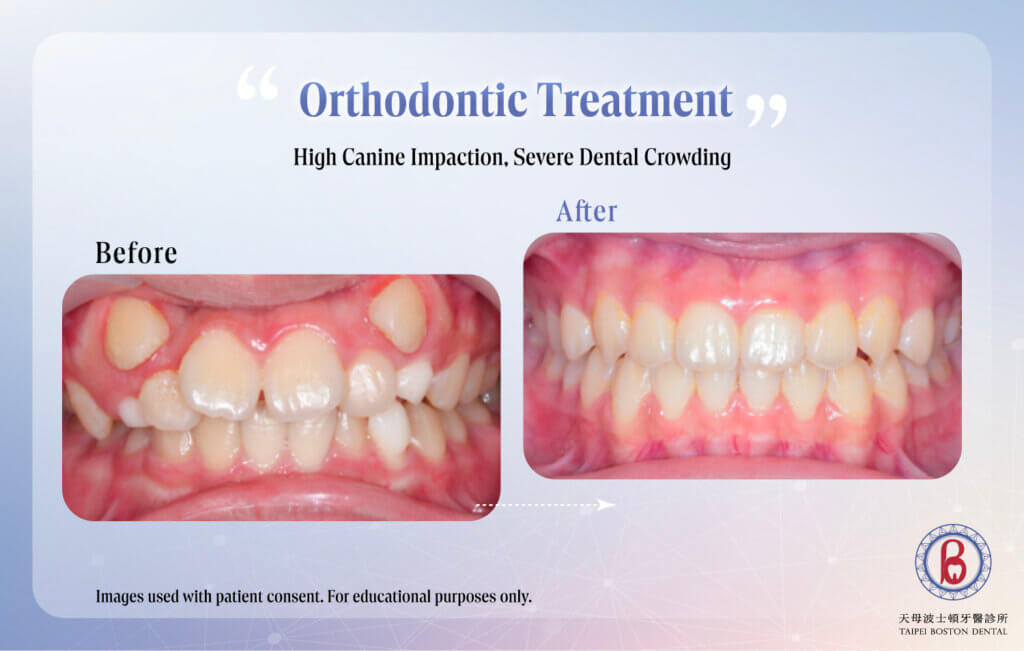
This patient had a high canine impaction in the upper jaw combined with severe dental crowding. Due to insufficient space in the dental arch, the canine could not erupt normally, resulting in misaligned teeth and increased difficulty in oral hygiene.
Our Orthodontics team created space through a carefully planned orthodontic approach, gradually guiding the impacted canine into its proper position while aligning the dental arch.
After treatment, the natural canine was successfully preserved and a stable bite was established. The patient’s teeth transformed from a crowded, irregular arrangement into a well-aligned, confident smile.
Case 2:Anterior Crossbite. Misaligned Teeth.
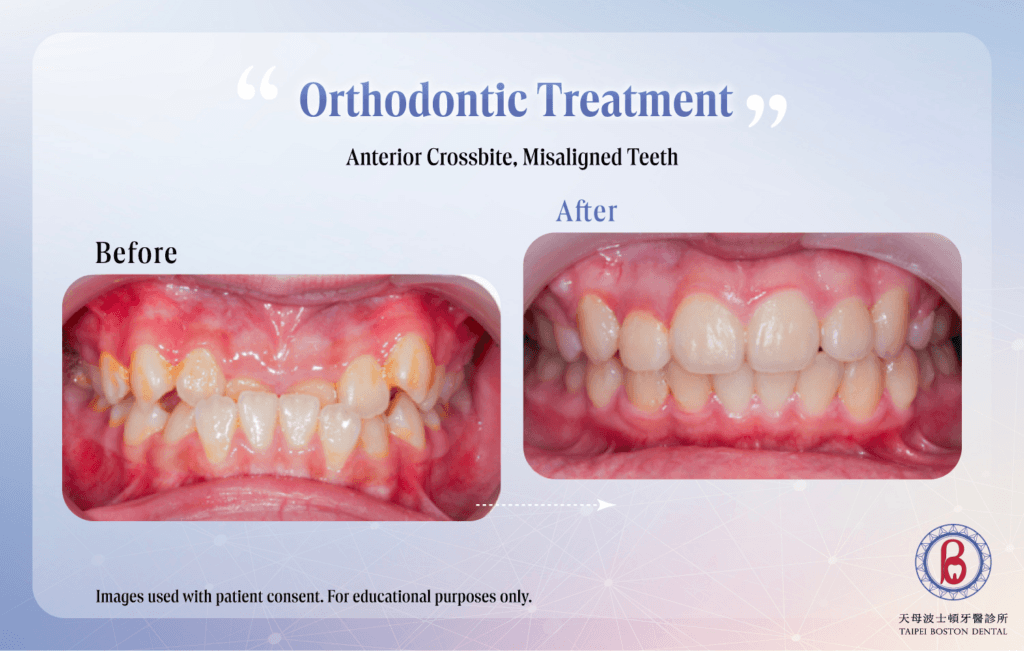
This patient presented with an anterior crossbite and misaligned front teeth in both the upper and lower jaws. The irregular alignment reduced chewing efficiency, made oral hygiene more difficult, and affected the patient’s confidence when smiling.
With a carefully designed orthodontic treatment plan, our Orthodontics team gradually corrected the bite and aligned the front teeth while balancing both function and aesthetics.
After treatment, the crossbite was successfully corrected, normal chewing function was restored, and the teeth were aligned into a natural, harmonious dental arch—helping the patient regain a confident smile.
Top Choice for Orthodontics in Tianmu | Taipei Boston Dental
If you are seeking a professional, safe, and detail-oriented orthodontics team, Taipei Boston Dental Clinic offers comprehensive evaluations and personalized treatment plans. Every journey is personally designed by our Board-Certified orthodontist, Dr. Jessica Yang, an expert in Invisible Orthodontics. By combining digital intraoral scanning, 3D tooth alignment analysis, and the Invisalign system, we help you regain a straight, aesthetic, and healthy smile through a comfortable treatment experience.