


Author | Dr. Sean Lee
Diplomate of the American Academy of Periodontology (AAP/ABP)
Master of Science in Dentistry, Henry M. Goldman School of Dental Medicine, Boston University
Director, Taipei Boston Dental
What is Periodontal Disease? How is it different from Gingivitis?
Gingivitis affects only the gums – you may see redness and bleeding on the gum surface, and it is reversible. Periodontal disease (gum disease), however, is a deeper, irreversible destruction: inflammation extends beneath the gums, affecting alveolar bone and the tooth-supporting structures.
“Periodontal disease” refers broadly to chronic inflammation and destruction of the tissues around the teeth, including the gums, alveolar bone, periodontal ligament and cementum. Initially it may present as gum inflammation and bleeding, but if left untreated the inflammation penetrates below the gum line, culminating in bone loss, tooth mobility and potentially tooth loss. In short, periodontal disease is what happens when gingivitis worsens, and early treatment is critical.
Why Does Periodontal Disease Occur? Three Main Causes & High-Risk Groups
The primary driver of periodontal disease is bacterial plaque and infection, but its progression is strongly influenced by lifestyle, systemic conditions and individual susceptibility.
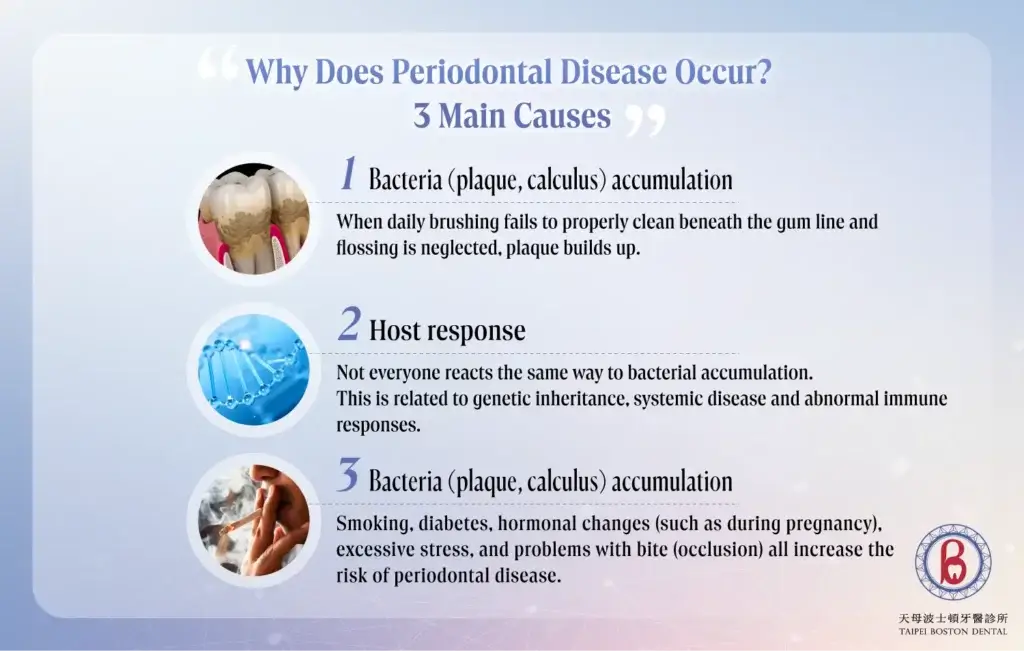
The three main contributing factors are:
- Bacteria (plaque, calculus) accumulation
When daily brushing fails to properly clean beneath the gum line and flossing is neglected, plaque builds up. Bacterial toxins then damage the periodontal tissues. - Host response
Not everyone reacts the same way to bacterial accumulation. Some individuals develop severe periodontal destruction from minimal plaque. This is related to genetic inheritance, systemic disease and abnormal immune responses. - Behavioural & environmental factors
Smoking, diabetes, hormonal changes (such as during pregnancy), excessive stress, and problems with bite (occlusion) all increase the risk of periodontal disease.
High-risk groups include: smokers, diabetes patients, those with prior periodontal treatment history, individuals with family history of periodontal disease, and persons with compromised immunity.
What Are the Early Warning Signs of Periodontal Disease? Five Key Self-Check Signals
Many patients may not notice tooth looseness yet, but the body has already started sending alarms.
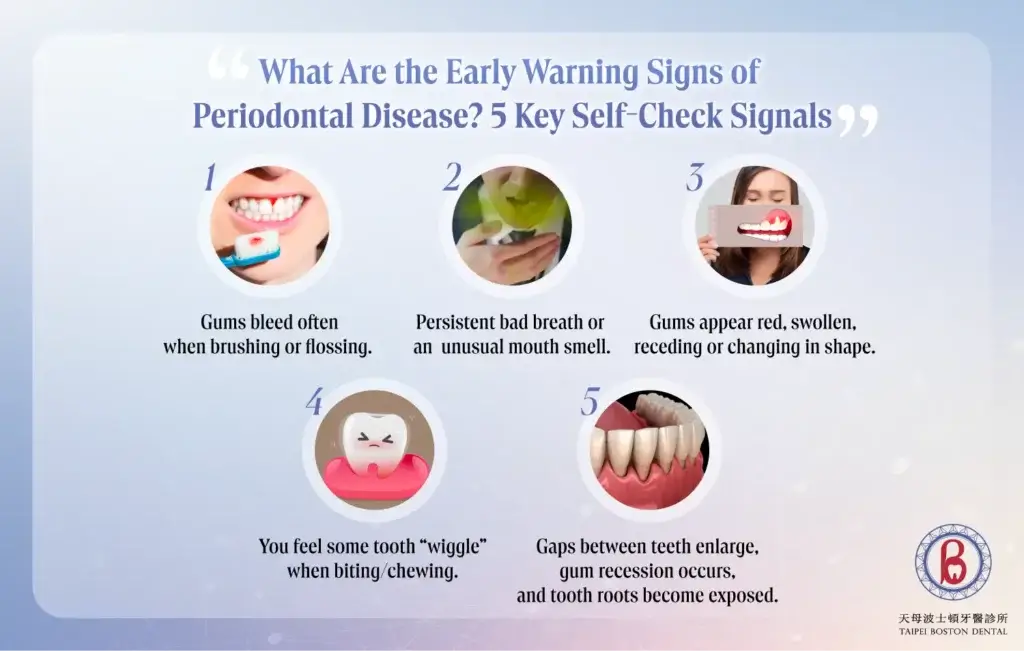
If you identify with any of the following five signs, it is advised to seek evaluation promptly:
- Gums bleed often when brushing or flossing.
- Persistent bad breath or an unusual mouth smell.
- Gums appear red, swollen, receding or changing in shape.
- You feel some tooth “wiggle” when biting/chewing.
- Gaps between teeth enlarge, gum recession occurs, and tooth roots become exposed.
These are typical symptoms marking the transition from mild to moderate/severe periodontal disease. Early intervention not only controls inflammation but prevents continued bone loss.
Myth-busting: Can Periodontal Disease Heal by Itself?
No – periodontal disease is a chronic bacterial infection coupled with tissue destruction. Without professional debridement and treatment, it will only worsen. Over‐the‐counter antiseptic mouthwashes or antibacterial toothpastes may temporarily ease surface symptoms, but cannot truly eliminate the deep-lying bacteria beneath the gum line.
If left untreated, periodontal disease may lead to:
- Irreversible alveolar bone loss
- Tooth mobility and eventual tooth loss
- Chronic oral inflammation with potential impact on cardiovascular health and diabetes control
Hence, early intervention and professional treatment are key to protecting oral health. If you suspect any issue, we invite you to schedule a comprehensive evaluation at Taipei Boston Dental.
How Can Periodontal Disease Be Treated? What Are the Options?
Treatment of periodontal disease must proceed in staged phases tailored to disease severity.
Initial Stage: Minimally invasive Non-Surgical Treatment
- Ultrasonic deep cleaning + Root planing (Scaling & Root Planing): using ultrasonic tools and special periodontal curettes, we clean calculus and plaque beneath the gums, then smooth the root surfaces to reduce future bacterial accumulation.
- Minimally-invasive laser-assisted periodontal therapy (Laser Assisted Periodontal Treatment): Using a water-laser, we can sterilize, soften calculus, and remove inflamed tissue. With a dental‐microscope to magnify the field, infection is precisely removed and healthy structure retained, restoring periodontal stability. Benefits include minimal invasiveness, less bleeding, and quicker recovery.
Advanced Stage: Surgical Periodontal Regeneration Treatment
- Periodontal Regeneration Surgery: Using bone graft material, membranes, growth factors such as Emdogain and PDGF, regeneration of alveolar bone and periodontal tissues is promoted. The microscope assisted approach minimizes wound size, so recovery is relatively fast.
Maintenance Stage: Supportive Periodontal Therapy (SPT)
- After treatment, periodic follow-up every 3–6 months is needed for professional periodontal cleaning and maintenance to ensure long-term stability and avoid relapse.
How Long Does Treatment Take? Are There Any Side-Effects?
Treatment time depends on severity:
- Mild periodontal disease: about 2–4 weeks to control inflammation.
- Moderate to severe disease: may take 2–6 months with phased treatment and monitoring of bone repair.
Generally, there are no “after-effects”, but if the tooth’s supporting bone was already greatly lost, post-treatment you may still see slight enlargement of gaps between teeth or some gum recession—these are natural results of tissue healing.
Will It Hurt?
Modern periodontal treatments have significantly improved in comfort. At Taipei Boston Dental, all periodontal procedures incorporate:
- The Calaject computer-controlled “painless” anaesthesia system, which greatly reduces discomfort from anesthetic injection.
- LiteTouch water-laser minimally invasive technology, enabling more comfortable treatment and faster recovery.
- Dental-microscope-assisted precision operation (Zeiss dental microscope) so the specialist works under magnified vision, enabling more precise and delicate treatment, preserving healthy tissue, improving outcomes and reducing postoperative discomfort.
Together, these technologies effectively reduce pain and bleeding, enabling patients to complete treatment in a relaxed state.
How Much Does Periodontal Treatment Cost?
The cost varies with disease status, treatment protocol and technology used. It is recommended to consult the clinic for specifics. Advanced treatments or specific surgical materials may apply. Common items include:
| Procedure | Approximate Cost (NT$) |
|---|---|
| Professional deep cleaning & calculus removal | ~ 2,500 – 10,000 |
| Periodontal antibiotic gel | ~ 1,000 – 2,000 |
| Stain removal | ~ 2,000 – 8,000 |
| Desensitization treatment | ~ 1,000 – 5,000 |
| Microscope-assisted periodontal regeneration surgery | ~ 25,000 – 40,000 per tooth |
| Crown-lengthening surgery (laser-assisted) | ~ 15,000 – 30,000 per tooth |
| Minimally invasive non-surgical treatment (laser-assisted) | ~ 15,000 – 30,000 per quadrant |
| Periodontal open-flap (flap surgery) | ~ 30,000 – 40,000 per quadrant |
If the condition is severe enough to require surgery or implant-based reconstruction, we recommend booking a consultation at Taipei Boston Dental so our specialist team can assess your case and formulate a comprehensive treatment plan.
How to Prevent Periodontal Disease

The key to prevention lies in “thorough cleaning and regular check-ups”. You can follow these four major rules:
- Brush thoroughly and floss daily: plaque is the main cause, and cleaning is the most basic and effective prevention.
- Regular scaling and periodontal check-ups: we recommend once every 6 months for early detection of inflammation.
- Smoking cessation and control of chronic disease: smoking and diabetes dramatically increase the risk of periodontal disease.
- Maintain a regular schedule and balanced diet: insufficient sleep and stress can weaken immunity and increase inflammatory response.
Frequently Asked Questions (Q&A)
Q1: Is periodontal disease contagious?
Periodontal disease is mainly caused by bacteria. Saliva may transmit bacteria resulting in cross-infection. It is recommended to avoid sharing utensils or toothbrushes.
Q2: After periodontal treatment, can I still get implants?
Yes. Provided the periodontal disease has been controlled and bone conditions are stable, we can often complete implant placement using Nobel Biocare TiUltra implants and X-Guide navigation system for highly accurate, safe reconstruction.
Q3: Will it relapse after treatment?
If you do not maintain regular maintenance or have poor cleaning habits, there is risk of relapse. We recommend professional periodontal check and maintenance every 3 to 6 months.
Periodontal Treatment in Taipei / Tianmu|Patient Success Stories
Case 1 : Severe Periodontitis with Gingival Suppuration
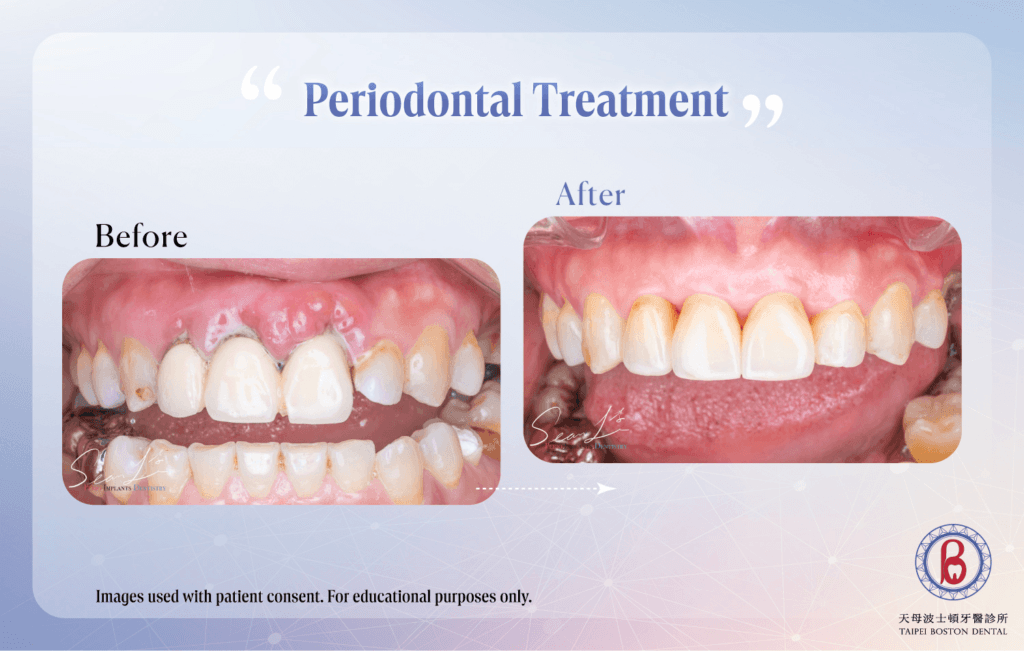
The patient had long-standing uncontrolled periodontal disease, resulting in gum redness, swelling, and pus formation. These symptoms caused discomfort during eating and daily activities, and the visible swelling also affected the patient’s appearance.
At our clinic, minimally invasive periodontal therapy assisted by water laser technology was performed to remove infected and inflamed tissue while promoting natural healing of the gums and surrounding bone. After treatment, the gums returned to a healthy condition with significant improvement in swelling and discomfort.
Finally, customized all-ceramic crowns were placed to restore a natural, clean, and harmonious appearance while maintaining both function and aesthetics.
Case 2 : Worsening Periodontal Disease & Dental Anxiety
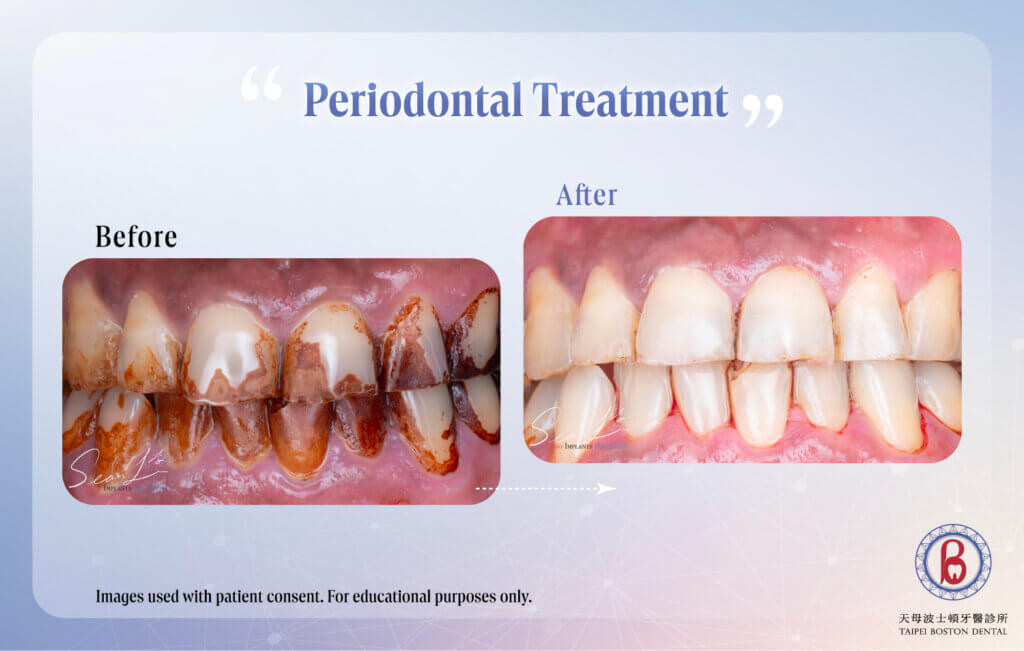
The patient had a long history of periodontal disease and smoking, leading to gum inflammation, bad breath, and reduced chewing function. Due to severe dental anxiety, treatment had been delayed until the condition began affecting daily life.
We used sedation dentistry to allow treatment in a relaxed, near-sleep state, followed by full-mouth water-laser assisted periodontal therapy to remove infection with minimal discomfort. Airflow polishing was also performed to restore a clean, brighter smile.
After treatment, the patient’s gum health improved significantly, discomfort resolved, and confidence in smiling returned.
Why Choose Taipei Boston Dental for Periodontal Treatment
Taipei Boston Dental is located in the heart of Tianmu area of Taipei, near Shilin, Dazhi and Neihu districts. Led by Dr. Sean Lee, our professional team is committed to bringing international-standard periodontal and implant treatment quality to Taiwan.
Dr. Lee is a diplomate of the American Academy of Periodontology (AAP/ABP) and specializes in minimally invasive periodontal treatment, periodontal regenerative surgery, gingival aesthetic surgery and full-mouth reconstruction treatments.
At Taipei Boston Dental, we also offer multiple world-class technologies:
• LiteTouch water laser – a no-incision, minimally invasive option that reduces bleeding and swelling and helps wounds heal faster.
• Calaject computer-assisted painless anaesthesia – greatly reduces injection discomfort, making treatment feel almost pain-free, comfortable and reassuring.
• Microscope-assisted periodontal treatment system – uses high-magnification imaging to precisely remove infection, preserve healthy tissue and improve long-term tissue stability.
• X-Guide navigation implant system – allows highly precise, safe implant placement even in areas where periodontal disease has already caused bone loss.
Healthy periodontal tissue is the most solid foundation of a confident smile. From early inflammation control to regeneration after severe bone loss, we offer comprehensive, minimally invasive and personalized treatment plans, helping you restore stable teeth and a confident smile. If you have bleeding gums, bad breath, tooth mobility or other concerns, we welcome you to book a professional periodontal evaluation at Taipei Boston Dental to tailor the best-fit treatment plan.